 By Lance Montana
 By Lance Montana
That pitch-side billboard you saw during the FIFA World Cup? There’s a good chance someone in another country saw a completely different ad.
Thanks to some very clever camera synchronisation (and not, it’s not AI, despite what half the internet thinks), broadcasters can show different ads to different countries from the exact same physical billboard.
How does it work?
The LED billboard flashes through four different ads incredibly quickly – faster than our eyes can distinguish. Each broadcast camera is synced to capture just one of those ads, meaning viewers in different countries see different sponsors, even though they’re all watching the same match.
Ironically, the only people who don’t see a proper ad are the fans in the stadium. To them, it’s just a flickering blur.
We’ve talked about personalised marketing for years, but for businesses, this is a reminder that marketing is no longer about reaching as many people as possible. It’s about as many people as possible, experiencing a version that’s most relevant to them.
The technology is flashy, but the principle is simple: the more relevant the message feels, the more likely people are to pay attention.
Your next customer might just be an AI agent.
Humans used to browse, compare and decide what to buy, but increasingly, AI is doing the browsing and comparing before we even see the shortlist.
Salesforce data recently shared by Neil Patel suggests AI agents influenced 20% of global online orders during the last holiday season, representing US$262 billion in sales.
Humans may still currently click “buy” for the most part (although that is changing with Agentic Commerce) but AI is deciding which brands make the cut, which means visibility is changing.
So what does that mean for businesses?
It means your product information needs to do more than look good. AI doesn’t care about your beautiful brand colours or that you’ve described something as “premium”. It wants facts:
Clear product description, accurate pricing, reviews, and proof that your product does what it says it does.
That doesn’t mean throwing your brand personality out the window because humans still buy with emotion.
But increasingly, your marketing has two audiences: the people making the purchase, and the AI helping them make the decision.
SEO helps brands become findable but the next challenge is becoming recommendable.
Tinder has rebranded for the first time in nearly a decade, with a new identity designed to make the original dating app feel more human again.
Created by Porto Rocha, the refresh centres on T, a fictional dating columnist with a little Carrie Bradshaw energy. There’s bolder typography, a sharper flame, a more grown-up red and nostalgic, scrapbook-style imagery.
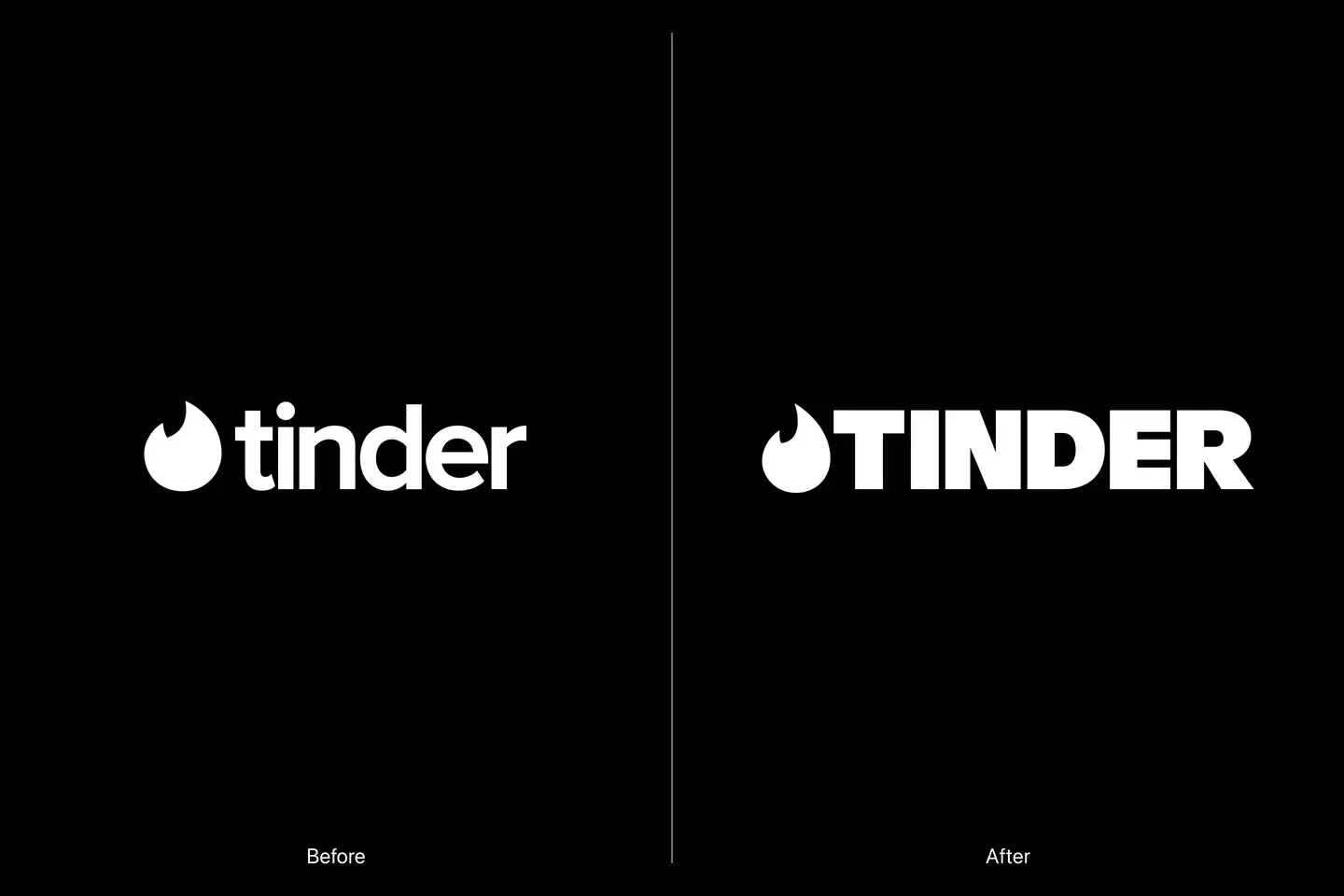
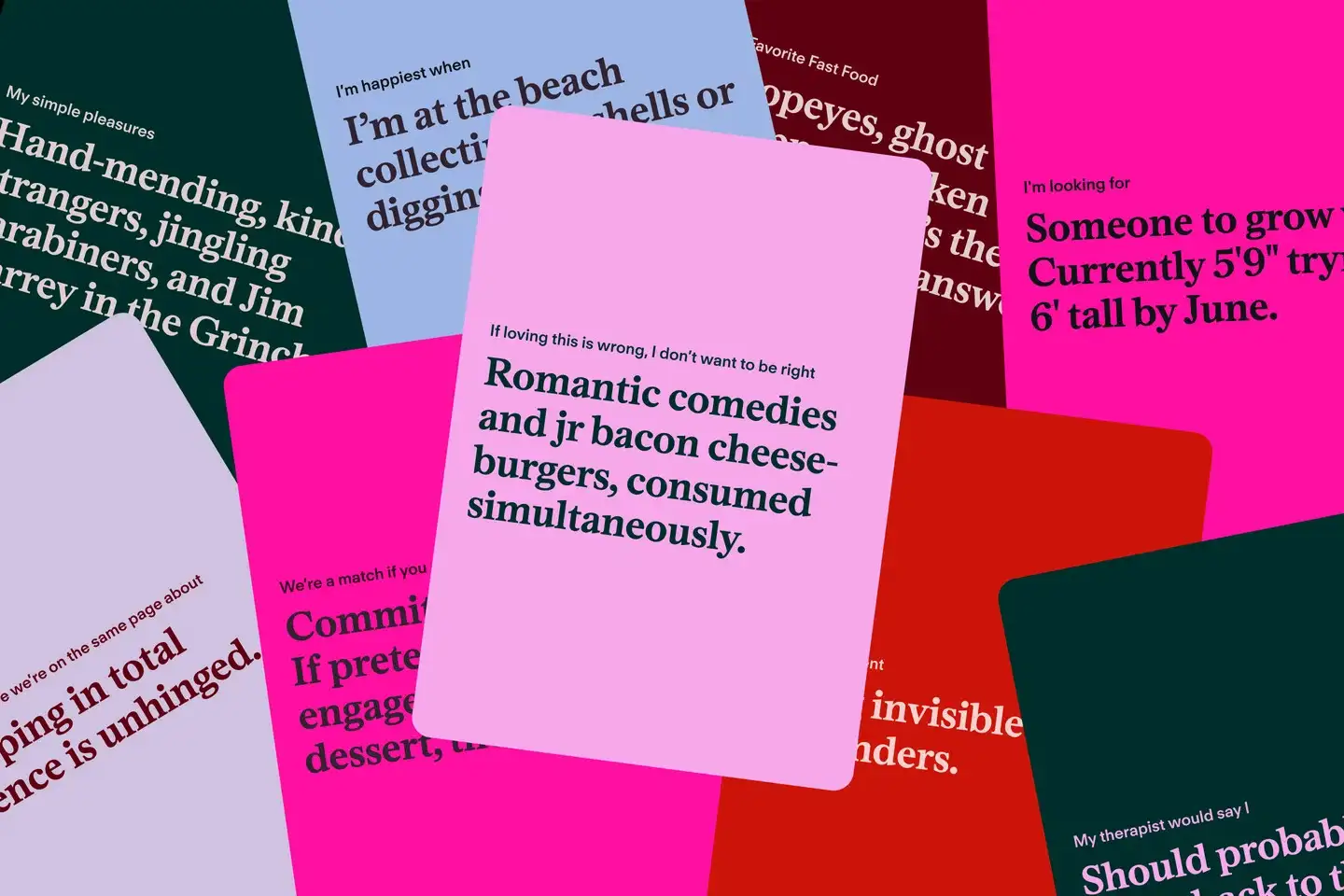
The result feels expressive, self-aware and less like a faceless piece of technology.
Our Creative Director Lloyd has some thoughts:
“What stands out most is that this isn’t just a visual refresh. It’s a strategic repositioning that embraces the contradictions of modern dating rather than trying to simplify them. I do wonder whether such a broad visual language can remain cohesive over time, but the overall creative direction is genuinely exciting. My only real criticism is the logo, which feels like a missed opportunity to create a more distinctive and ownable mark. That said, the strength of the strategy, voice and visual system means this rebrand is about far more than a logo.”
And that matters, because Tinder’s challenge was never just visual.
Dating apps now carry years of cultural baggage: excitement, fatigue, awkwardness, bad bios and the occasional man holding a fish. A cleaner logo or new logo was never going to fix that.
Tinder needs to show it understands how modern dating actually feels
But while the brand is talking about chemistry, honesty, and human connection, it is also reportedly exploring AI features that could analyse users’ camera rolls. For some, that feels less like romantic connection and more like digital surveillance. And if there’s a gap between what a brand is promising and what it delivers, today’s users are quick to swipe onto the next.
The takeaway for businesses and brands is this: a rebrand might be able to change perception, but only the product can make the promise believable.
So, if you are thinking about a rebrand, don’t start the process with “What should we look like?”
Start it with, “what is our role, and what do we want people to feel?”
And then make sure the experience follows through.
Because the branding may get the first date, but the experience decides whether there’s a second.
Google may still dominate traditional search, but it no longer owns the beginning of every discovery journey.
People are increasingly finding brands, products and recommendations through TikTok before they search for them elsewhere. They see a creator mention a product, watch someone demonstrate it, read the comments, look at alternatives and only then head to Google to validate what they have already discovered.
That means search is not necessarily the starting point; it’s the fact-check point.
TikTok works differently because it does not require a perfectly formed query. It can introduce someone to a problem, category or product they did not know to search for.
For brands, that makes discoverability broader than ranking for existing demand.
You still need to appear when someone searches. But you also need content capable of creating the search in the first place. That means showing the product in context, answering real questions, using the language customers actually use and creating content that is useful enough to be shared rather than merely optimised.
Videos, by default, are also far more engaging. Once you’ve watched, liked or commented on one, TikTok is more likely to show you similar content. The comment section can be just as useful, giving people a quick sense of whether a product is actually worth trying.
But the goal shouldn’t be to make every TikTok go viral (virality is a bonus, not a strategy).
The better objective is to become recognisable before the customer reaches the search bar.
Instagram is testing horizontal video, Stories on smart TVs, longer creator content, live experiences and a Series feature that lets selected creators bundle Reels into episodes viewers can watch in order and return to later.
Basically, the app that got us addicted to scrolling tiny vertical videos now wants the biggest screen in the house.
Which sounds a little off brand, until you realise pretty much everyone is doing it.
YouTube already owns a major share of living-room viewing, Netflix has experimented with short-form discovery, and TikTok has embraced microdramas.
At this point, every platform wants to be every other platform.
In a nutshell, what this means for brands is you need to move away from starting every piece of content with: “what should we post on Instagram?”
Instead, question whether the idea is strong enough to become a Reel, a longer video, a creator collaboration, a search result, a television moment or even a shopping experience?
Stop creating content around platforms, and focus on creating content so good, it can live anywhere.
If you love what we’ve shared above and want to be kept in the loop with our weekly email, The Brief, you can sign up here. We’ll only send you things we love and think you’ll find useful, and you can unsubscribe at any time.
And if you need some help exploring any of the above within your own marketing strategy, or you need a rebrand, a custom website built from scratch, Google or social ads, print materials, blog posts – or the whole lot – we’d love to chat.